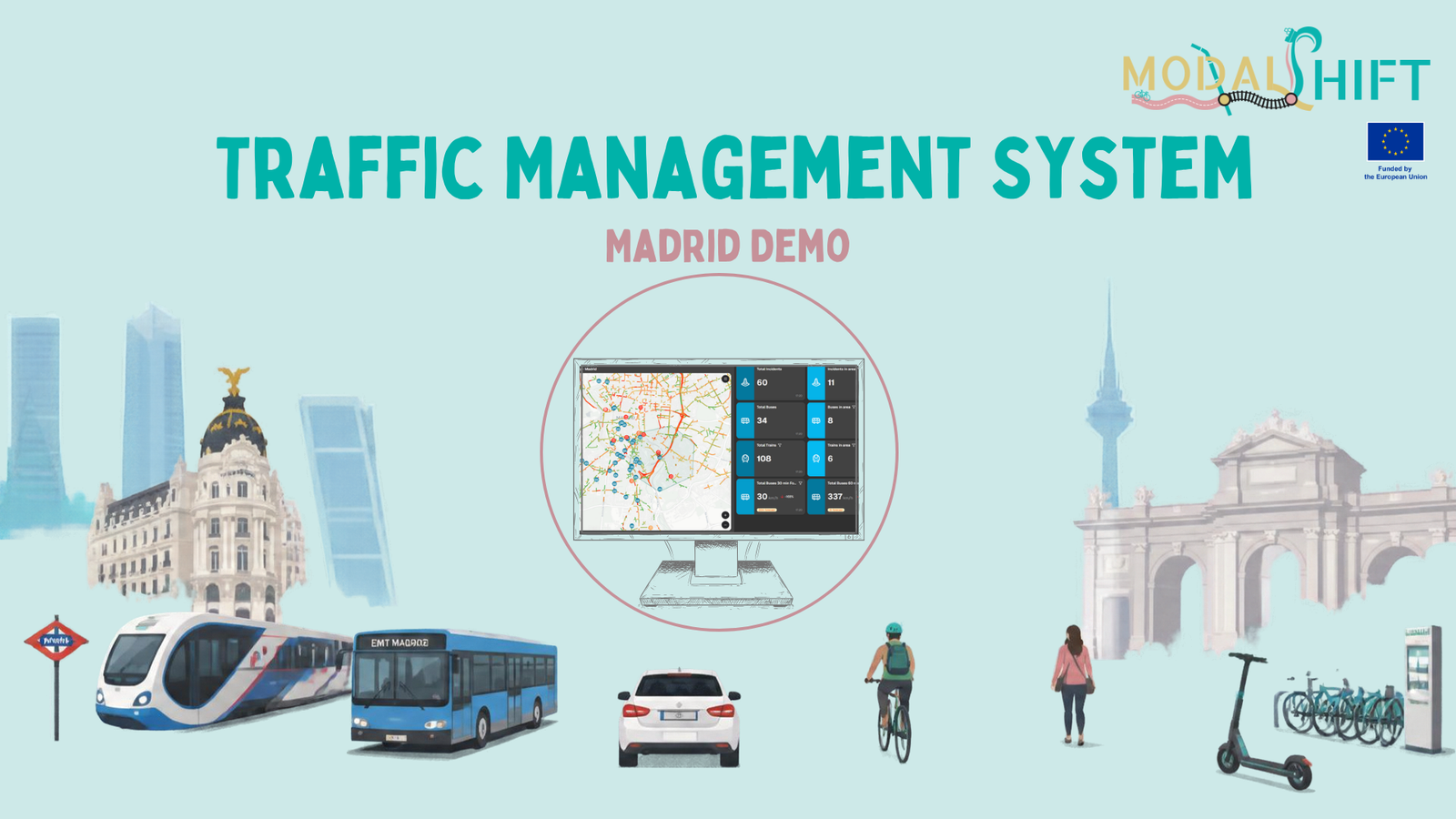
MODALSHIFT has reached an important technical milestone with the delivery of the first version of its Multimodal Traffic Management System, achieved as planned in August 2026, at Month 15 of the project.
This first operational version brings together several key components of the MODALSHIFT approach by connecting mobility data through the project’s Data Space, makes this information accessible through traffic management dashboards, and introduces new tools to facilitate the integration of additional data sources.
An important foundation for the next stages of the project, the system will then progressively integrate further datasets, technical components and functionalities for the MODALSHIFT Case Studies.
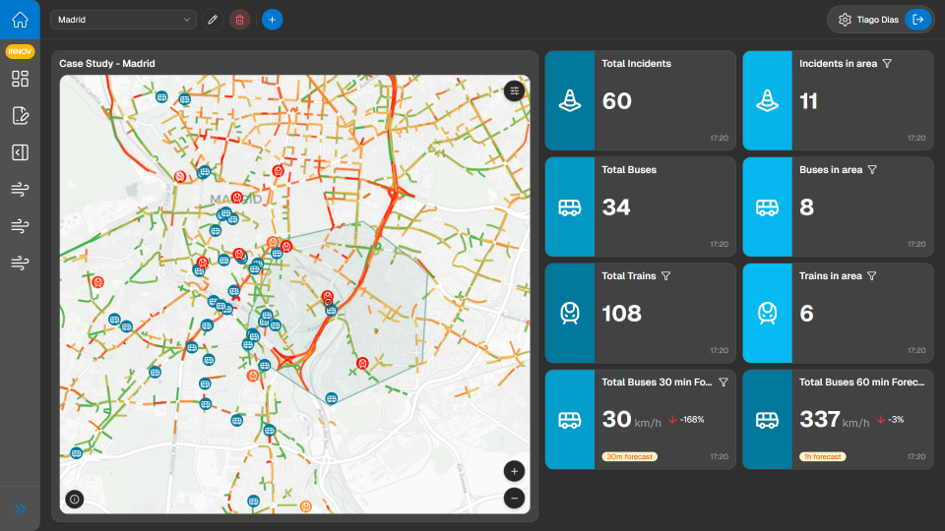
This article presents an overview of the ninth milestone of MODALSHIFT, describing how the Atlas Pulse platform is working.
Connecting the Data Space with the traffic management platform
One of the main first achievements is the operational integration of the MODALSHIFT Data Space with A-to-Be’s Atlas Traffic Management platform.
The MODALSHIFT Data Space is working following the Sovity model enabling mobility data to be exchanged securely between different organisations by dividing data governance (control plane) from data transfer (data plane) and requiring every exchange to be preceded by a formal contract negotiation between provider and consumer before any data can move, whether via Pull or Push transfer. This contract-driven approach ensures secure, sovereign and traceable data sharing, letting each partner retain control over its own data while enabling standardised interoperability across the multi-country project.
On MODALSHIFT, to demonstrate the effectiveness of the platform, the project used open data on trains in Madrid provided by RENFE, while ITA was acting as the data provider and Atlas Pulse as the data consumer. It validated the complete process, from making a dataset available and defining its access conditions to transferring, processing and displaying the resulting information within the Atlas platform.
Watch the demonstration showing how Atlas Pulse Fetcher connects to the MODALSHIFT Data Space using the Sovity connector: Atlas Pulse Fetcher – Data Space Integration Demo
First dashboards available for Madrid and Varna
Reasching Milestone 9 also included the first working dashboard views for the Madrid and Varna Case Studies.
Building on technology created within the Horizon 2020 TANGENT project, together with previous data collection developments from the C-Streets project, MODALSHIFT used live open data sources identified with support from TELLAE, to create initial dashboards for Madrid and Varna during the first months of the technical work.
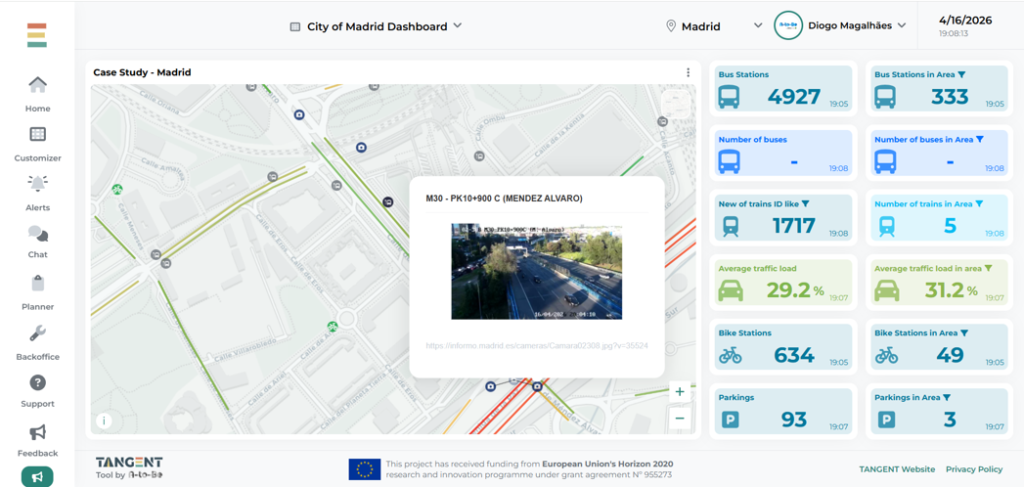
Now being integrated into A-to-Be’s Atlas Traffic Management platform, the technolcogical dashboard improved visualisation capabilities and additional functionalities, including video camera operation and integrations with sensors and variable message signs. These dashboards will progressively provide the Case Study partners with tools to access and review mobility information and support the monitoring of transport conditions.
Making new data sources easier to integrate
In addition to the data space implementation into the Atlas platform and the dashboards development, the Atlas Pulse Data Source Wizard was created, enabling users to configure new open data sources without technical expertise.
Through a guided interface, users can :
- define where the data comes from
- transform the data when necessary
- identify key information such as location and time
- determine how the resulting data should appear in maps
- create new or define which indicators should appear on the dashboard
Read the full report here: Article
What comes next?
The first version of the Traffic Management System is only at the beginning. Next stages will include further integration of data sources, continued development of access controls, additional connections between MODALSHIFT technical components and progressive validation with the Case Studies. Consequently, it will lead to a scalable, interoperable and stakeholder-oriented system for multimodal transport management and optimisation.
A collaborative achievement
Reaching this milestone required close collaboration between several MODALSHIFT partners.
- A-to-Be, leader of WP4, led the development and integration of the traffic management platform. The milestone report was prepared by Tiago Dias, with contributions from André Patacas, Gil Teixeira, Tiago Batista Alves and Diogo Magalhães, all from A-to-Be.
- ITA, coordinator of MODALSHIFT, developed and documented the operational Data Space used for the integration demonstration.
- TELLAE also contributed through its work on identifying and collecting open data sources, supporting the creation of the first Madrid and Varna dashboards.
![[HERALDO] New ways of travelling: from shared mobility to inter modal systems](https://modalshift.eu/wp-content/uploads/2025/11/Modalshift-1080x675.jpg)